April 26, 2026
Four Things Your Wedding Contracts MUST Include

Photo: Lauren Depuy Photography
How Your Wedding Vendor Contracts Protect You
For many engaged couples, reading wedding vendor contracts is a daunting task. It might be the first time you’ve read all the fine print and legalese of the terms and conditions. The goal of a contract is to outline all the details of your vendors’ and venue’s services so both parties are clear on what exactly is going to happen.
Your wedding day is a big deal, and your contracts make sure you’re protected in the event something doesn’t go according to plan. Here are four clauses you must review in your wedding vendor contracts.

Photo: Tom Waldenberg Photography
#1: Details – Who, What, Where, When
This is perhaps the most obvious clause, but it bears repeating. The contract needs to lay out:
- Who is performing the service?
- Who is receiving the service?
- What is the scope of the service being provided?
- What is not included in the scope of service?
- Where is the service being provided?
- When are the decision-making deadlines?
- When is the service being provided?
- When will final products be delivered?
Depending on the wedding vendor you are working with, there might be additional details related to pre-wedding meetings, involvement of other parties, or hard goods delivery (paper, attire, rentals, photos, food, etc.).
Pro tip – if you’re contracting a planner, photographer, or another vendor that may use associates, be sure to ask who your associate will be!

Photo: Face in Lens Creative
#2: Payment & Fees
Your wedding vendor contract should not only lay out the total price, but also include any other details related to payment.
- What is the payment schedule?
- What part of the payment is nonrefundable?
- Are there any service fees?
- Are there overtime fees?
- What payment methods are accepted?
- Is gratuity included?
- For wedding venue contracts, are there additional fees for using outside catering?
Reading the fine print about fees on your wedding vendor contracts can save you thousands of dollars – make sure you know exactly what is included and the total cost.
Pro tip – calculate the total cost of the contract before signing so you can more easily compare venue costs!
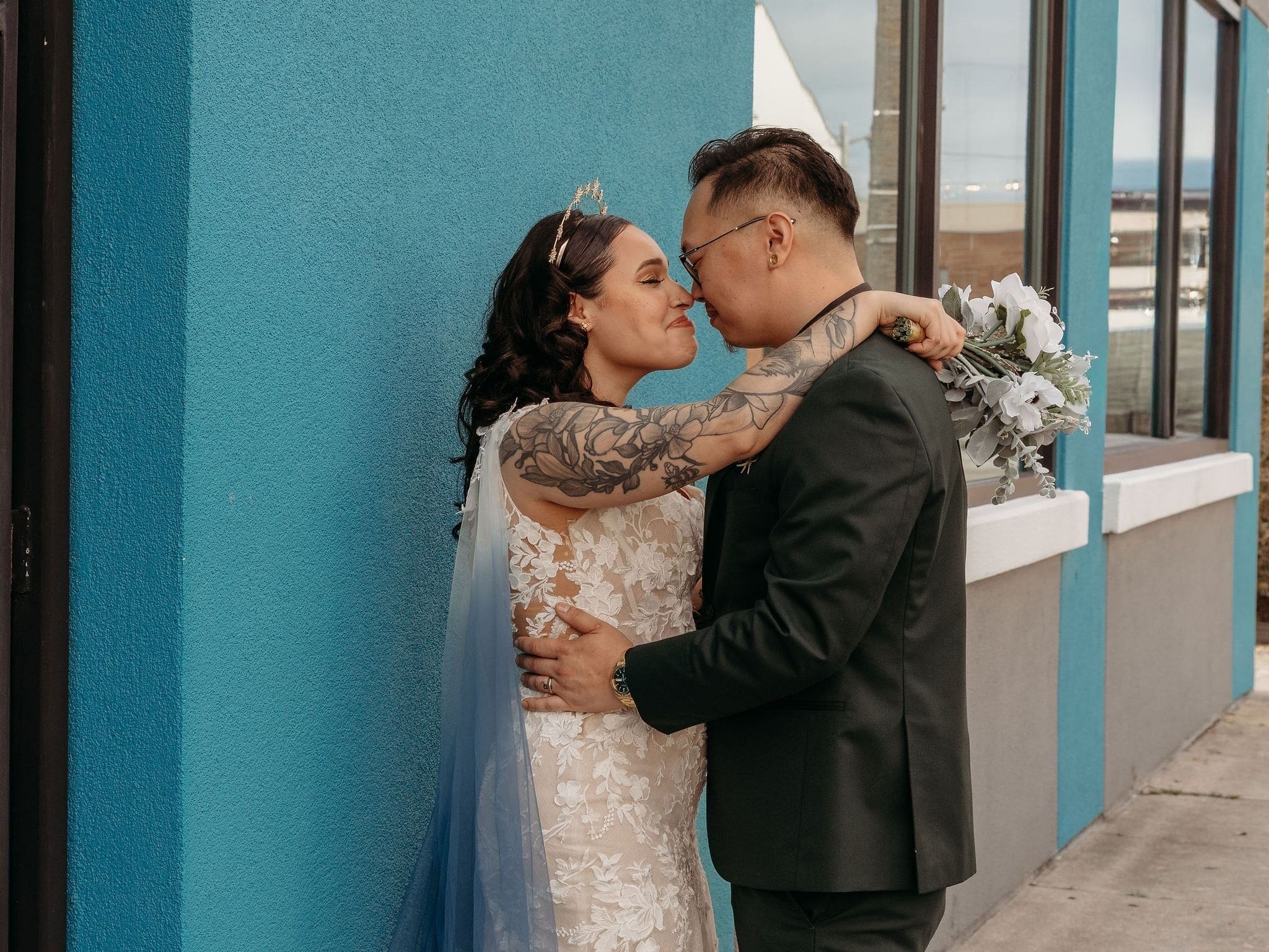
Photo: Blissful Bridal
#3: Working Environment
Your wedding vendor may need certain conditions in order to successfully provide their service. As a wedding harpist, my instrument cannot be outside in precipitation or direct sun; other wedding musicians may have similar clauses. If you are choosing an outdoor ceremony, our venue contract should also outline the options for indoor ceremonies in case of poor weather. For vendors that rely on electricity, like DJs, rentals, catering, or hair stylists, these clauses may also cover your responsibility to provide electricity to your vendors. These environmental factors might be included in your contract:
- Rain/snow/precipitation
- Temperature, both high and low
- Sunlight
- Access to electrical outlets
- Parking
- Venue access
- Prohibited substances or materials (i.e. open flames, tape, nails, smoke, invasive plants, confetti, etc.)
Additionally, your wedding day is a working day for all of your vendors, and everyone deserves to feel safe at work. Your contract should have a clause indicating the steps taken should a work environment be unsafe, whether due to environmental factors like extreme weather or due to the actions of a guest or another vendor.
Pro tip – have a detailed poor weather plan that you can follow just in case Mother Nature doesn’t follow the script!

Photo: Maggie Collazo Photo
#4: What If?
No one wants to imagine their wedding day affected by a break-up, business closure, or pandemic. But just in case, your wedding contracts should tell you what happens if you have to cancel or reschedule your wedding or if your wedding vendor is unable to serve your wedding. These clauses must outline any fees associated with cancellation or reschedule, any refundable payments, and steps for legal mediation.
The contract doesn’t just plan for your perfect wedding day, it plans for the unexpected to give you peace of mind.
Pro tip – wedding insurance is cheap and can easily save you thousands of dollars in lost deposits!

Photo: Karena Schroeder Photography
Conclusion
Reading through wedding vendor contracts can be overwhelming, but as long as these four pillars are covered, your biggest items are taken care of. Your contracts must cover the scope of services, fees, environment and logistics, and contingency plans. The contract is there to protect you as much as it is to protect your vendors. It keeps both parties clear on the exact terms of the agreement and lets you enjoy a peaceful and joyful celebration.
Meet your wedding musician
Ready to book a wedding professional who values your peace of mind as much as the music? Inquire today to start the conversation.